
Beyond affinity: selection of antibody variants with optimal biophysical properties and reduced immunogenicity from mammalian display libraries
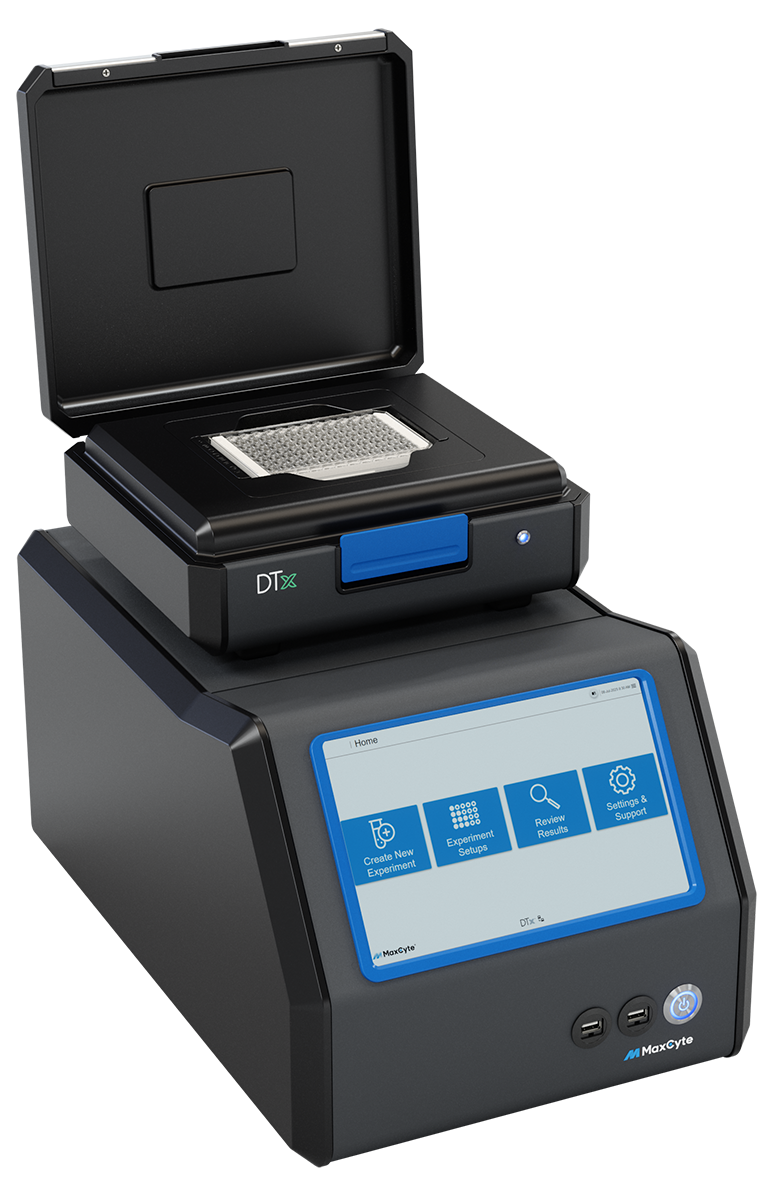
A mammalian antibody display library was constructed using TALEN-mediated integration enabled by Maxcyte STx electroporation. Improved antibody variants exhibited optimal biophysical properties, including high solubility, low aggregation and low T cell immune response, all of which could help to avoid costly, late-stage, clinical failures of protein drugs.
Read MoreCar Window
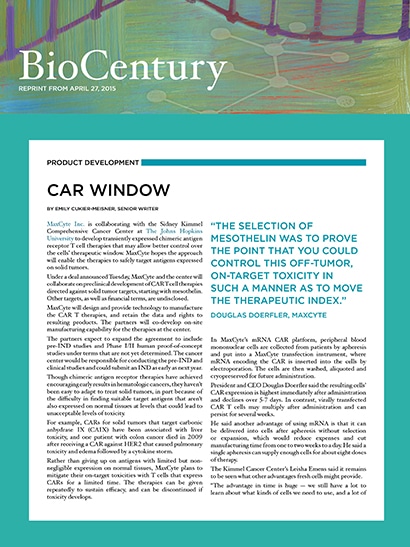
MaxCyte Inc. is collaborating with the Sidney Kimmel Comprehensive Cancer Center at The Johns Hopkins University to develop transiently expressed chimeric antigen receptor T cell therapies that may allow better control over the cells’ therapeutic window. MaxCyte hopes the approach will enable the therapies to safely target antigens expressed on solid tumors.
Read MoreCCR5-edited CD4+ T cells augment HIV-specific immunity to enable post-rebound control of HIV replication
This Phase 1 clinical trial demonstrated high-efficiency gene editing with CCR5 ZFNs and the MaxCyte GT Platform. Streamlined manufacturing of the CD4 T Cell therapy led to post rebound control of HIV replication and a heightened immune response in patients.
Read MoreCHO-S Antibody Titers Gram/Liter Using Flow Electroporation-Mediated Transient Gene Expression followed by Rapid Migration to High-Yield Stable Cell Lines
In recent years, researchers have turned to transient gene expression (TGE) as an alternative to CHO stable cell line generation for early-stage antibody development.
Read MoreClinical scale electroloading of mature dendritic cells with melanoma whole tumor cell lysate is superior to conventional lysate co-incubation in triggering robust in vitro expansion of functional antigen-specific CTL
Recent commercial approval of cancer vaccine, demonstrating statistically significant improvement in overall survival of prostate cancer patients has spurred renewed interest in active immunotherapies; specifically, strategies that lead to enhanced biological activity and robust efficacy for dendritic cell vaccines.
Read MoreClinical Scale Zinc Finger Nuclease-mediated Gene Editing of PD-1 in Tumor Infiltrating Lymphocytes for the Treatment of Metastatic Melanoma
Programmed cell death-1 (PD-1) is expressed on activated T cells and represents an attractive target for gene-editing of tumor targeted T cells prior to adoptive cell transfer (ACT).
Read MoreCRISPR-Cas9 Gene Repair of Hematopoietic Stem Cells From Patients With X-linked Chronic Granulomatous Disease
Gene repair of CD34+ hematopoietic stem and progenitor cells (HSPCs) may avoid problems associated with gene therapy, such as vector-related mutagenesis and dysregulated transgene expression.
Read MoreDelivery of Whole Tumor Lysate into Dendritic Cells for Cancer Vaccination Electroporation Protocols: Preclinical and Clinical Gene Medicine
Synthesizes electroporation, electroporation chemotherapy, and electroporation gene therapy, with a focus on the latter.
Read MoreDeveloping a Luciferase-Based NF-κB Reporter Assay with Transiently Transfected HEK 293 Cells
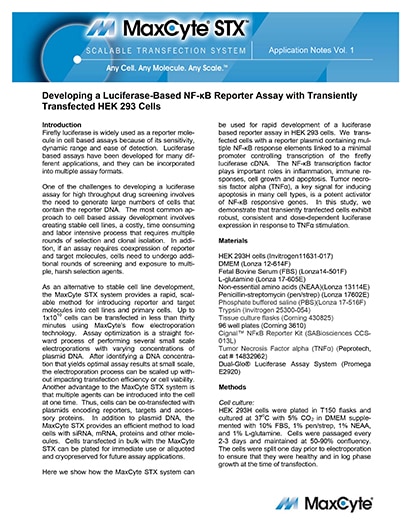
Firefly luciferase is widely used as a reporter mole cule in cell based assays because of its sensitivity, dynamic range and ease of detection.
Read MoreDeveloping Assays for Screening GPCRs with Transiently Transfected Cells Using the MaxCyte® STX™ System
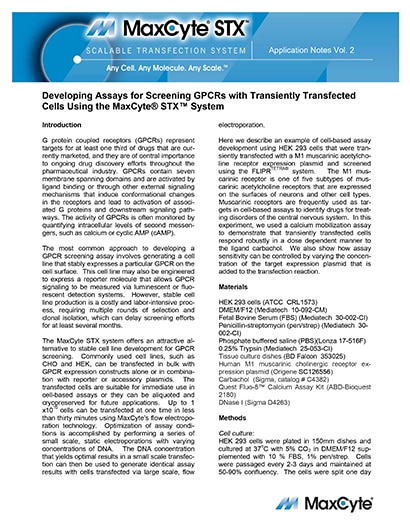
G protein coupled receptors (GPCRs) represent targets for at least one third of drugs that are cur rently marketed, and they are of central importance to ongoing drug discovery efforts throughout the pharmaceutical industry.
Read More