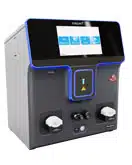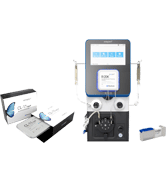

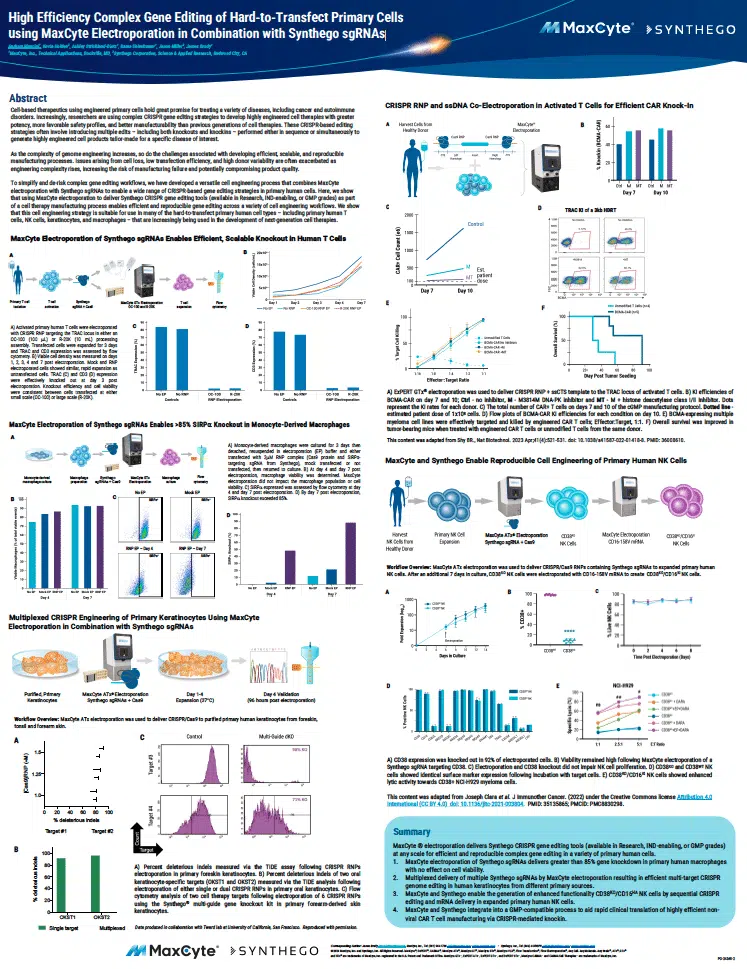
High Efficiency Complex Gene Editing of Hard-to-Transfect Primary Cells using MaxCyte Electroporation in Combination with Synthego sgRNAs
The use of engineered keratinocytes for cell therapy has long been an attractive option to treat various disorders.
Read MoreScalable Electroporation of Adult Keratinocytes with Multiplexed CRISPR Ribonucleoproteins for the Development of Novel Cell Therapeutics
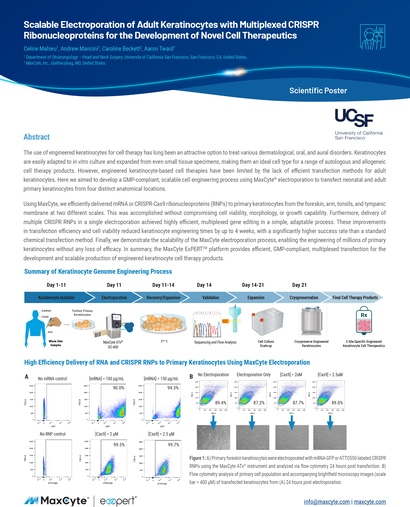
The use of engineered keratinocytes for cell therapy has long been an attractive option to treat various disorders.
Read MoreUsing Flow Electroporation to Find More Relevant Candidates and Shorten the Antibody Development Timeline
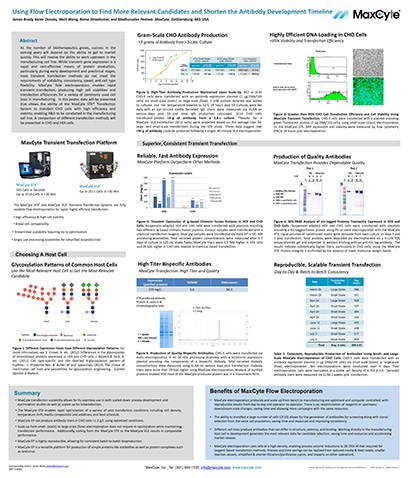
As the number of biotherapeutics grows, success in the coming years will depend on the ability to get to market quickly. This will involve the ability to work upstream in the manufacturing cell line. While transient gene expression is a rapid and cost-effective means of protein production, particularly during early development and preclinical stages, most transient transfection methods do not meet the requirements of scalability, consistency, speed, and cell type flexibility.
Read MoreYellow Fluorescent Protein-Based Assay to Measure GABAA Channel Activation and Allosteric Modulation in CHO-K1 Cells
The γ-aminobutyric acid A (GABAA) ion channels are important drug targets for treatment of neurological and psychiatric disorders. Finding GABAA channel subtype selective allosteric modulators could lead to new improved treatments.
Read MoreRapid generation of cells for ion channel assays: efficient, large-scale transfection using the MaxCyte® STX™ system, convenient cell culture using Corning® HYPERFlask™ vessels, and robust target activity assayed by the Sophion QPatch
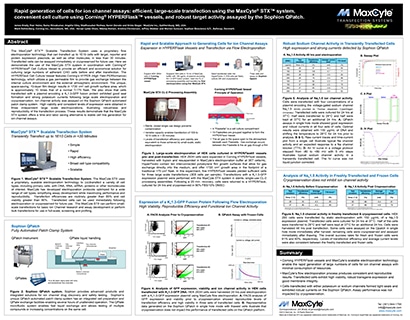
The MaxCyte® STX™ Scalable Transfection System uses a proprietary flow electroporation technology that can transfect up to 1×10¹⁰ cells with target, reporter and protein expression plasmids, as well as other molecules, in less than 30 minutes.
Read MoreRapid, in vivo, evaluation of antiangiogenic and antineoplastic gene products by nonviral transfection of tumor cells
Using a nonviral, electroporation-based gene transfection approach, we demonstrate the efficient and consistent transfection of two poorly immunogenic tumor cell lines: B16F10 melanoma and renal carcinoma (RENCA). Three genes, IL-12, angiostatin (AS), and an endostatin:angiostatin fusion protein (ES:AS) were subcloned into a DNA plasmid containing EBNA1-OriP, which was then transfected into B16F10 and RENCA cells.
Read MoreRegimen-Specific Effects of RNA-Modified Chimeric Antigen Receptor T Cells in Mice with Advanced Leukemia
Cytotoxic T lymphocytes modified with chimeric antigen receptors (CARs) for adoptive immunotherapy of hematologic malignancies have demonstrated activity in early phase clinical trials. While T cells bearing stably expressed CARs are efficacious and have potential long-term persistence, temporary expression of a CAR via RNA electroporation is also potentially efficacious in preclinical models.
Read MoreSecond-Generation Antibodies Neutralize Emerging SARS-CoV-2 Variants of Concern
Recently emerged SARS-CoV-2 variants show resistance to some antibodies that were authorized for emergency use. We employed hybridoma technology combined with authentic virus assays to develop second-generation antibodies.
Read MoreSelective Field Effects on Intracellular Vacuoles and Vesicle Membranes with Nanosecond Electric Pulses
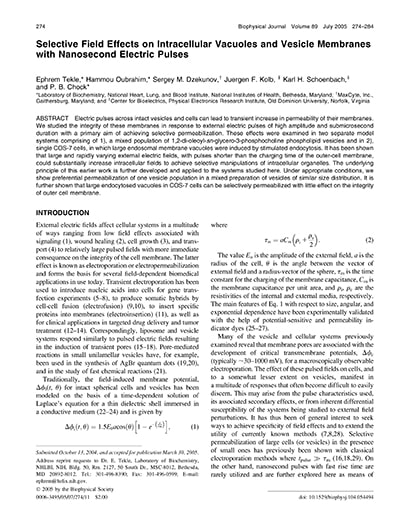
Electric pulses across intact vesicles and cells can lead to transient increase in permeability of their membranes. We studied the integrity of these membranes in response to external electric pulses of high amplitude and submicrosecond duration with a primary aim of achieving selective permeabilization.
Read MoreShifting the Balance
Transient transfection has the unique ability of facilitating progression of superior candidates through development, as well as accelerating the generation of quality stable cell lines. This can help to mitigate early risk, while bridging the gap with manufacturing to decrease time to market.
Read More