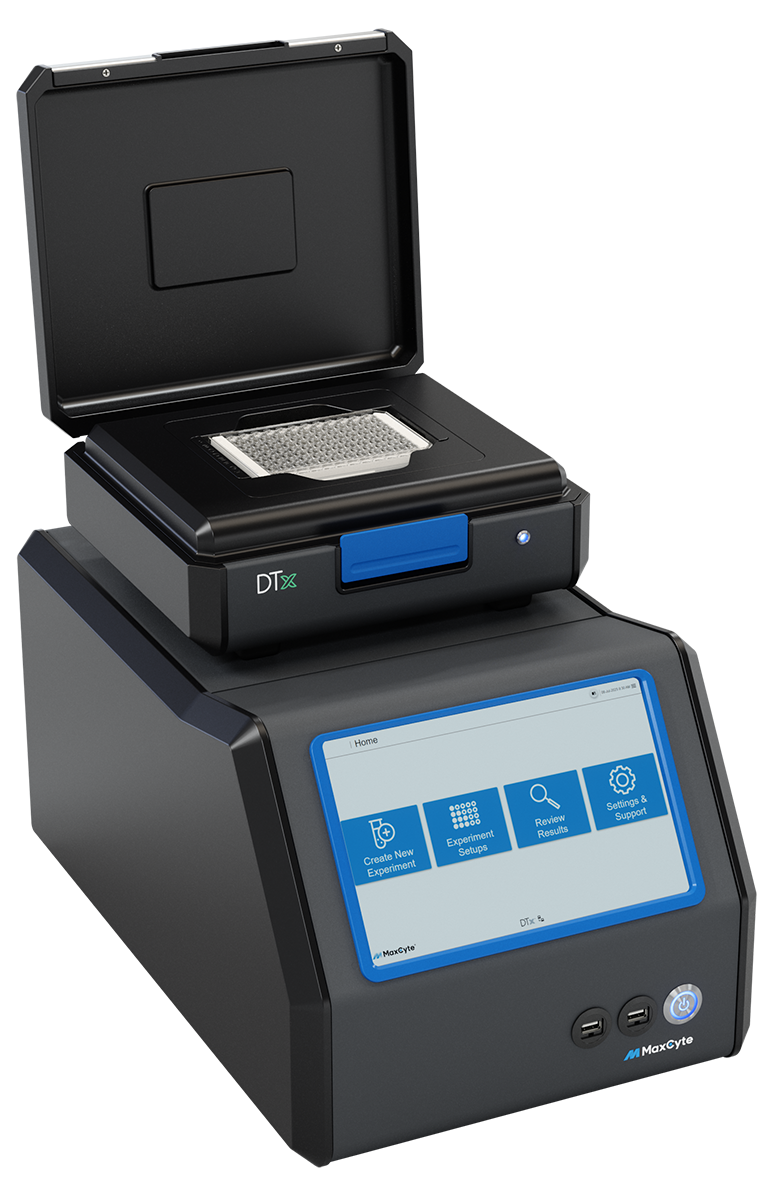

Efficient, Scalable Manufacturing of Virus-Like Particles for the Delivery of Gene Editor Ribonucleoproteins Using a GMP-Compatible Electroporation Platform
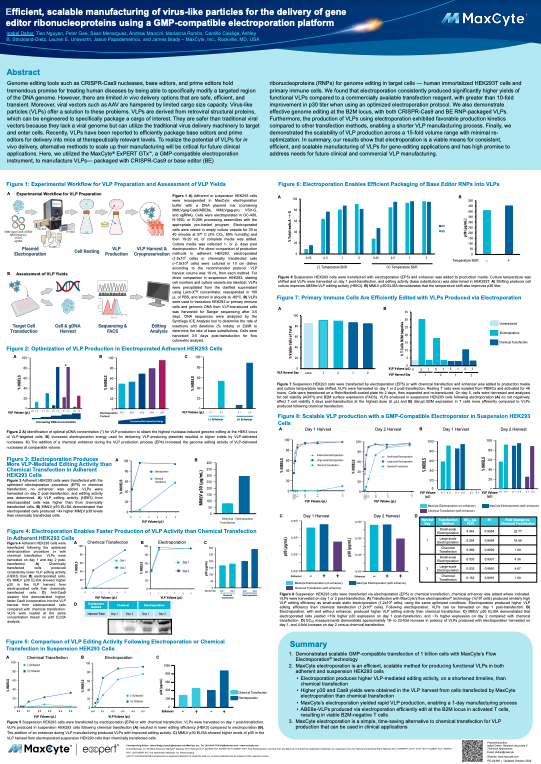
Genome editing tools such as CRISPR-Cas9 nucleases, base editors, and prime editors hold tremendous promise for treating human diseases by being able to specifically modify a targeted region of the DNA genome.
Read MoreMaxCyte helped a partner refine their T cell therapy process
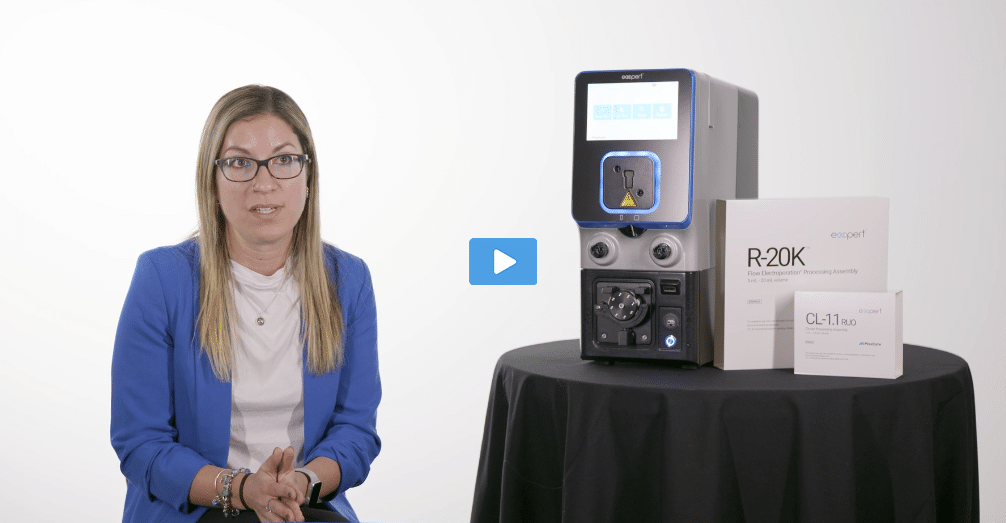
See how MaxCyte helped a partner refine their T cell therapy process—from culture conditions and mRNA design to electroporation
Read MoreEmpowering CDMOs: A Critical Tech Transfer Rescue
How we identified and resolved a critical flaw in the tech transfer process from customer CDMO.
Read MoreMaxCyte® Enabled Development of Allogeneic CAR T Cells as a Potential Therapy for Acute Myeloid Leukemia
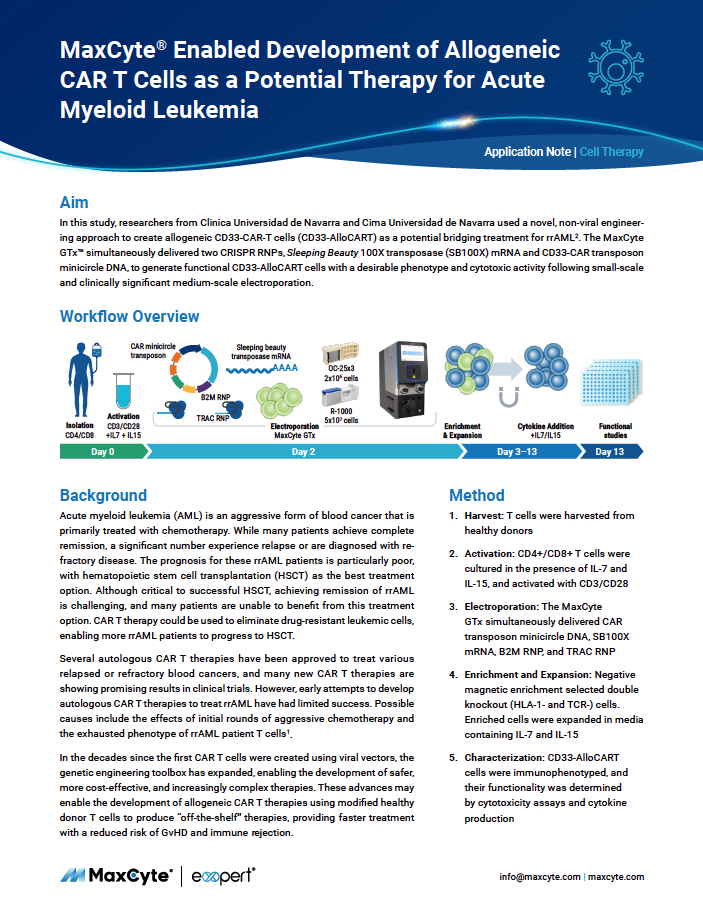
Although critical to successful HSCT, achieving remission of rrAML is challenging, and many patients are unable to benefit from this treatment option. CAR T therapy could be used to eliminate drug-resistant leukemic cells, enabling more rrAML patients to progress to HSCT.
Read MoreSeQure™ Risk Assessment Services Align with FDA Guidance for Gene-Edited Human Gene Therapy Products
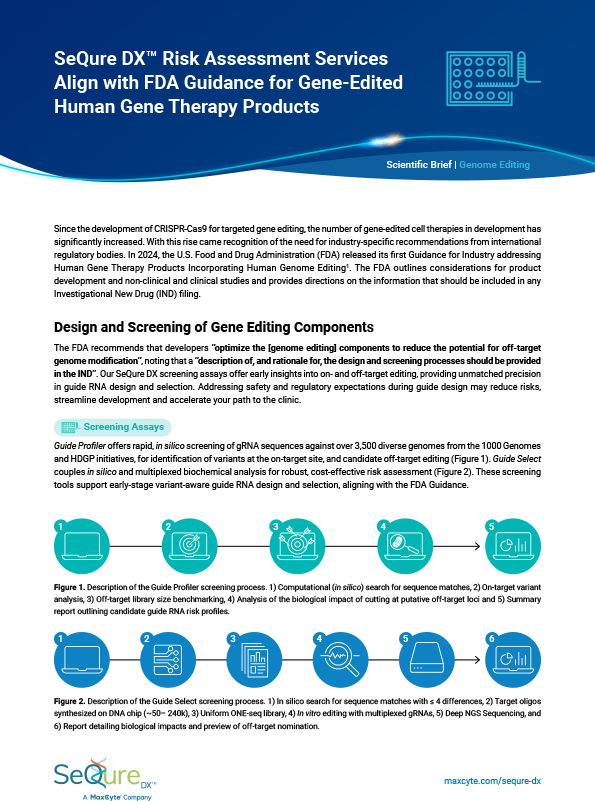
Our SeQure screening assays offer early insights into on- and off-target editing, addressing FDA and other regulatory expectations during guide design to reduce risk, streamline development and accelerate your path to the clinic.
Read MoreBase Editing of the Fetal Hemoglobin Promoter Yields Elevated Levels of HbF Expression in HSPC-Derived Red Blood Cells
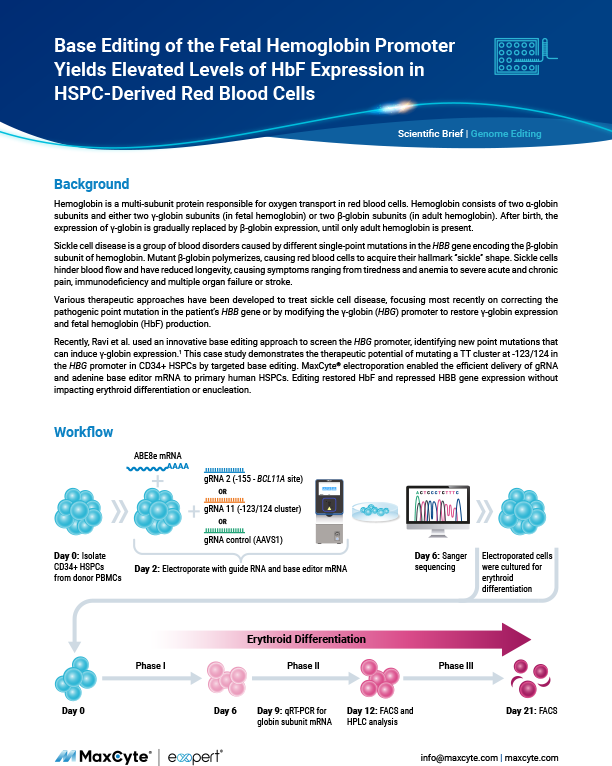
This case study demonstrates the therapeutic potential of mutating a TT cluster at -123/124 in the HBG promoter in CD34+ HSPCs by targeted base editing. MaxCyte® electroporation enabled the efficient delivery of gRNA and adenine base editor mRNA to primary human HSPCs.
Read MoremRNA CAR NK Cells as Potential Anti-Sarcoma, Solid Tumor Therapy
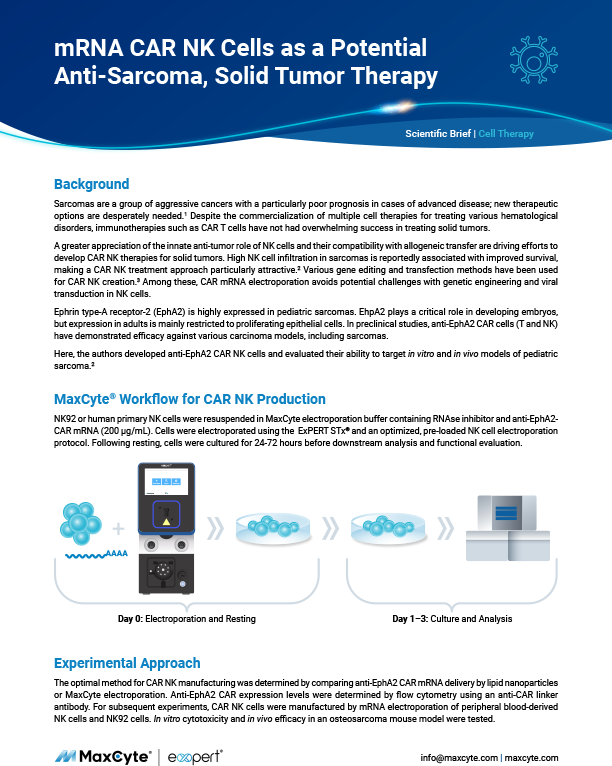
The authors developed anti-EphA2 CAR NK cells and evaluated their ability to target in vitro and in vivo models of pediatric sarcoma.
Read MoreMaxCyte® Enabled Development of Landing-Pad CHO Cell Line for Mammalian Display
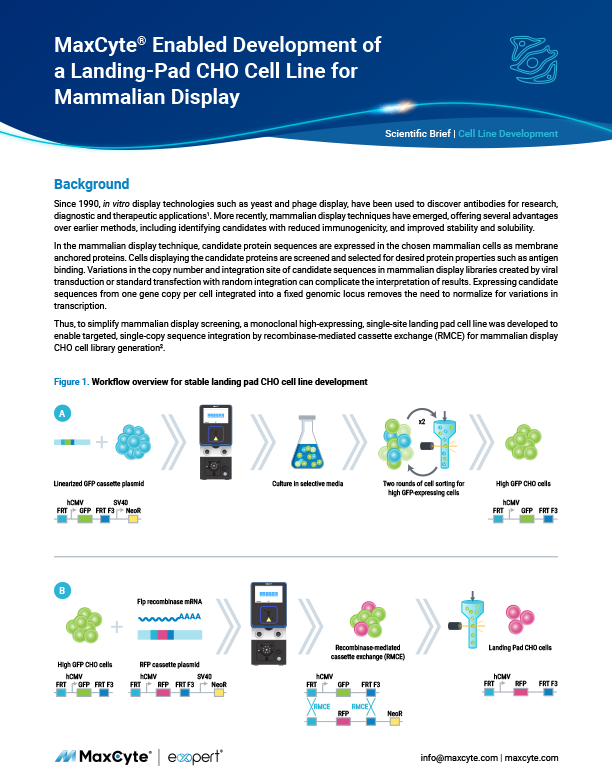
Mammalian display techniques have proven beneficial in the identification of antibodies for the lab and clinic. To simplify the screening of mammalian cells, MaxCyte electroporation helped develop a single-site landing-pad cell line, enabling targeted, single-copy sequence integration by RMCE.
Read MoreMaxCyte Enabled the Development and Rapid, Reproducible Manufacturing of TranspoCART Cells
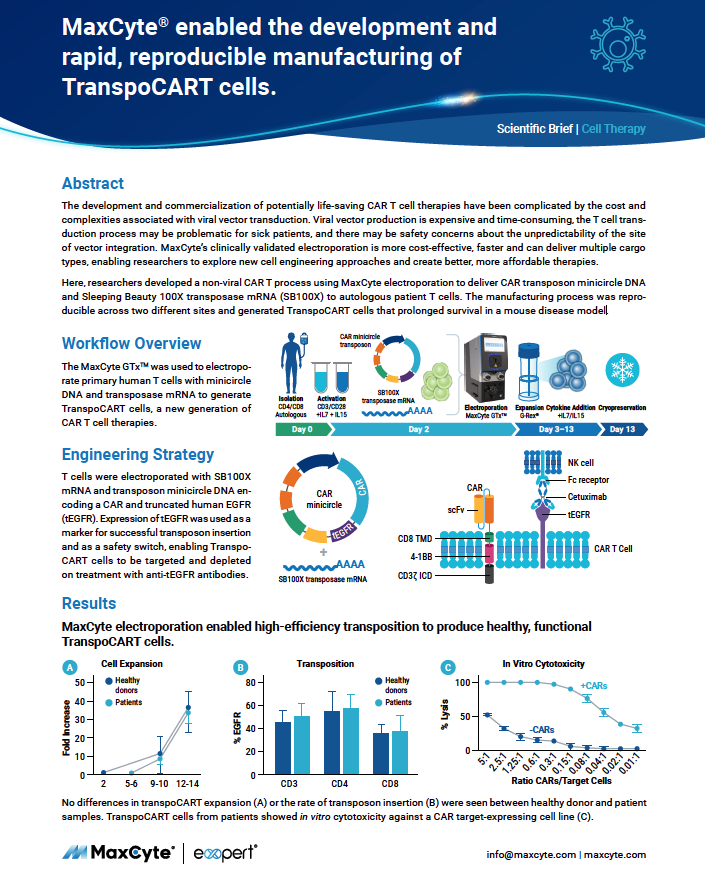
Here, researchers developed a non-viral CAR T process using MaxCyte electroporation to deliver CAR transposon minicircle DNA and Sleeping Beauty 100X transposase mRNA (SB100X) to autologous patient T cells. The manufacturing process was reproducible across two different sites and generated TranspoCART cells that prolonged survival in a mouse disease model.
Read MoreMaxCyte Electroporation Enables Efficient Antibody Discovery by Mammalian Display
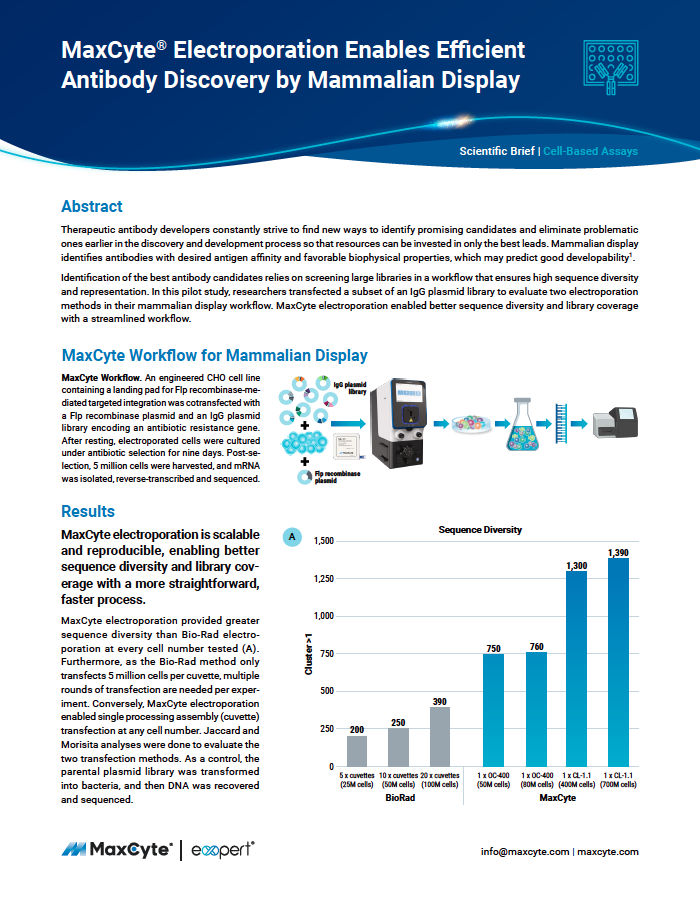
In this pilot study, researchers transfected a subset of an IgG plasmid library to evaluate two electroporation methods in their mammalian display workflow. MaxCyte electroporation enabled better sequence diversity and library coverage with a streamlined workflow.
Read More